DISCOVERIES & INVENTIONS
Discoveries & Inventions
Timelines where knowledge arrives early, late, or never: engines in antiquity, medicine a century sooner, libraries unburned. Each page follows an idea let loose in a different year.
11 charted timelines in this galaxy
Discoveries & Inventions
11Knowledge arrives early, late, or never.

DISCOVERIES & INVENTIONS · AUG 1939 · LONG ISLAND
The letter stays in the drawer
Long Island, August 1939. Leo Szilard has drafted a warning to the President about atomic bombs, and needs the one signature every American knows. This is the timeline where Einstein declines to sign.

DISCOVERIES & INVENTIONS · AUG 1684 · CAMBRIDGE
The apple misses Newton
London, January 1684. Three men in a coffee house set a wager that will send Edmond Halley riding to Cambridge, where a reclusive professor has the answer in a drawer. This is the timeline where the ride is never made.
DISCOVERIES & INVENTIONS · 30 APR 1993 · GENEVA
The web stays in the lab
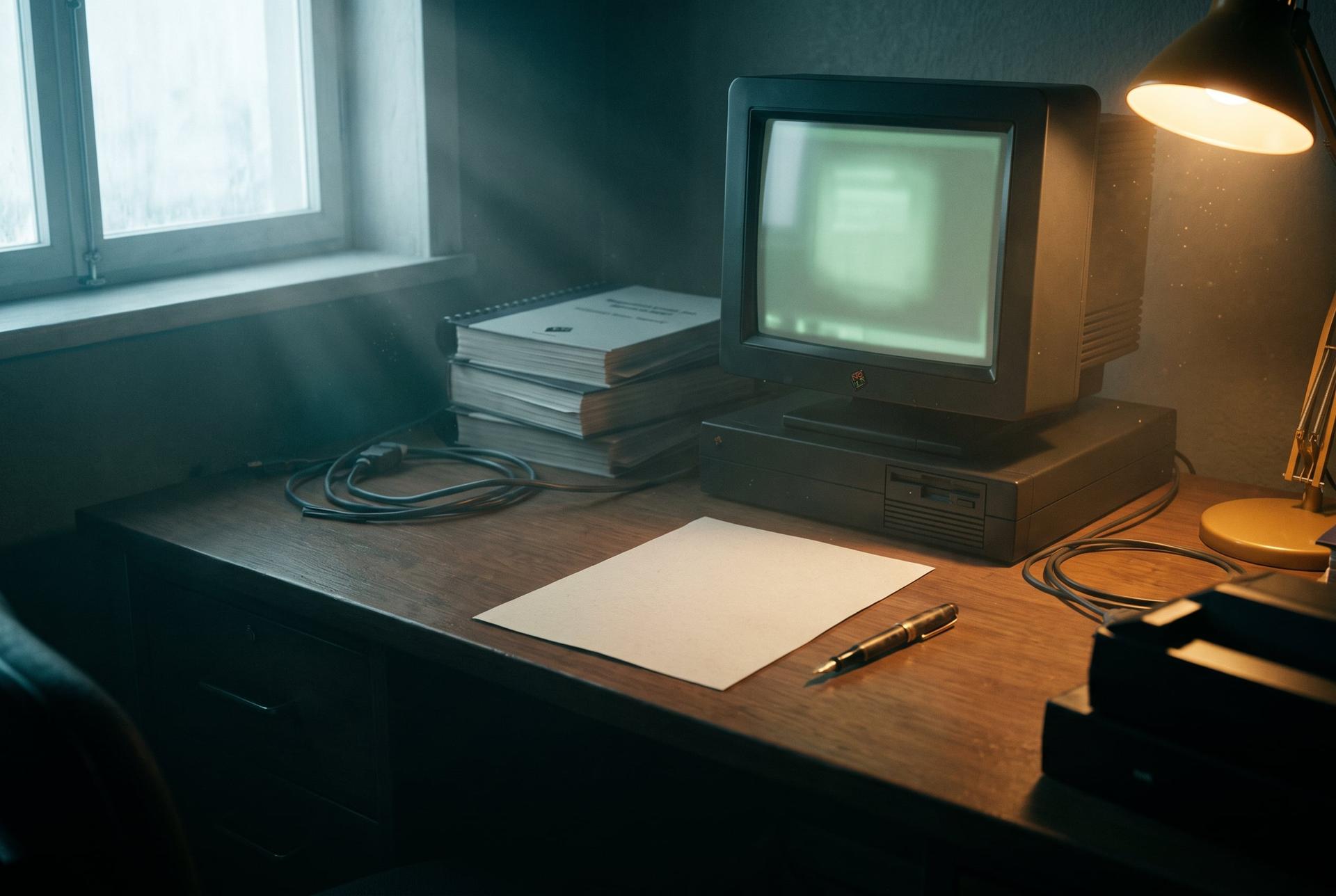
Geneva, 30 April 1993. A one-page declaration waits on a desk at CERN, releasing the World Wide Web to everyone, forever, for nothing. This is the timeline where it is never signed.
DISCOVERIES & INVENTIONS · 10 NOV 1977 · BOCA RATON
The chairman uncrosses his arms
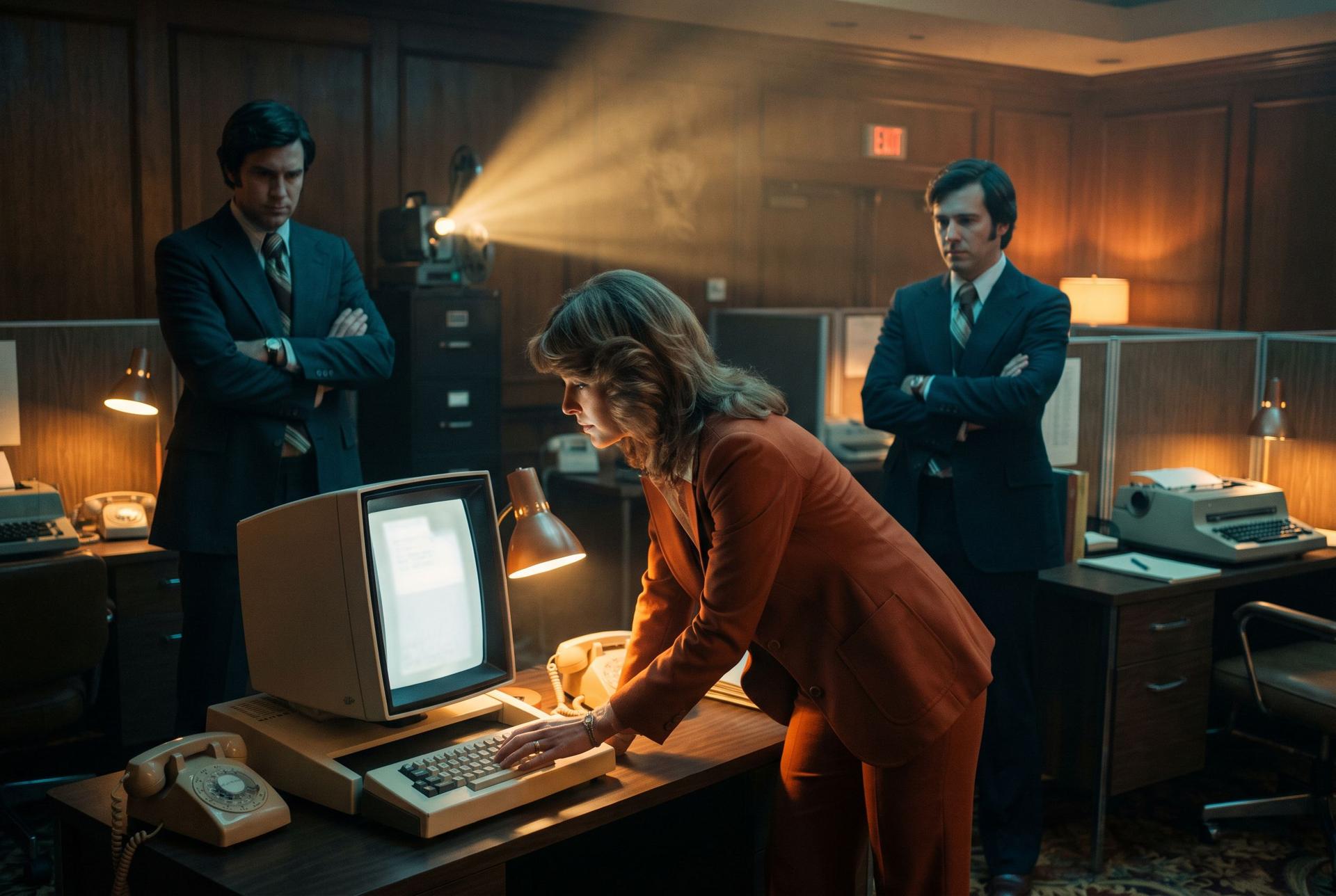
November 1977, a Xerox sales conference in Boca Raton. On a mock office set flown in on two chartered jets, the company's Palo Alto laboratory demonstrates the personal computer it has already built: the screen, the mouse, the network, the laser printer. The executives cross their arms. This is the timeline where their chairman does not.

DISCOVERIES & INVENTIONS · 1965 · THE PUNJAB
The seed in the dry year
In 1965 two failed monsoons and a rising population set India and Pakistan on course for the famine Paul Ehrlich would soon call unstoppable. Norman Borlaug's dwarf Mexican wheat reached them late and half dead, and was sown by hand as the two nations went to war. In our timeline that thin seed still came up and helped feed a subcontinent. This is the timeline where it comes up too thin to save.
DISCOVERIES & INVENTIONS · 1901 · LONG ISLAND
The tower that lit the coast
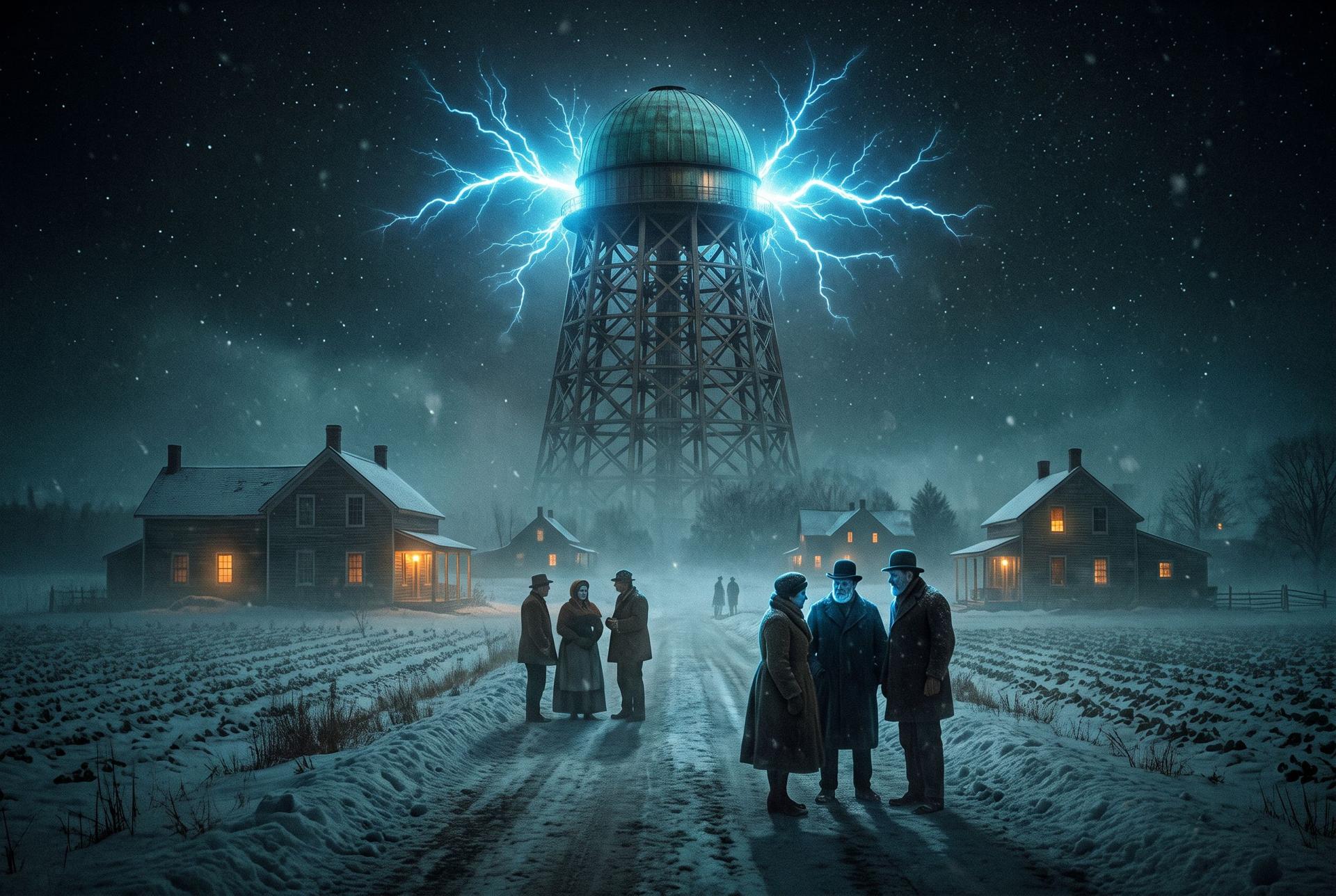
1901, Long Island. J.P. Morgan's money is raising Nikola Tesla a tower meant to send words and power through the earth to all of it at once. In our timeline the checks stopped, the tower was dynamited for scrap, and Tesla died in a rented room. This is the timeline where Morgan signs one more check, and one winter night the copper dome answers.

DISCOVERIES & INVENTIONS · 1847 · VIENNA
The doctors wash their hands
May 1847, the maternity wards of the Vienna General Hospital. A young doctor named Ignaz Semmelweis has proved that a basin of chlorinated lime at the ward door cuts childbed-fever deaths from nearly one mother in five to almost none. In our timeline the profession mocked him and let him die unheard. This is the timeline where Vienna believes the basin.

DISCOVERIES & INVENTIONS · 1258 · BAGHDAD
The ink stays in the books
1258, and the Mongol army of Hulagu Khan stands at the walls of Baghdad, seat of the caliphs and keeper of the richest libraries of the medieval world. This is the timeline where the caliph opens the gates in time, and the books are never poured into the Tigris.
DISCOVERIES & INVENTIONS · AD 62 · ALEXANDRIA
The engine in the temple
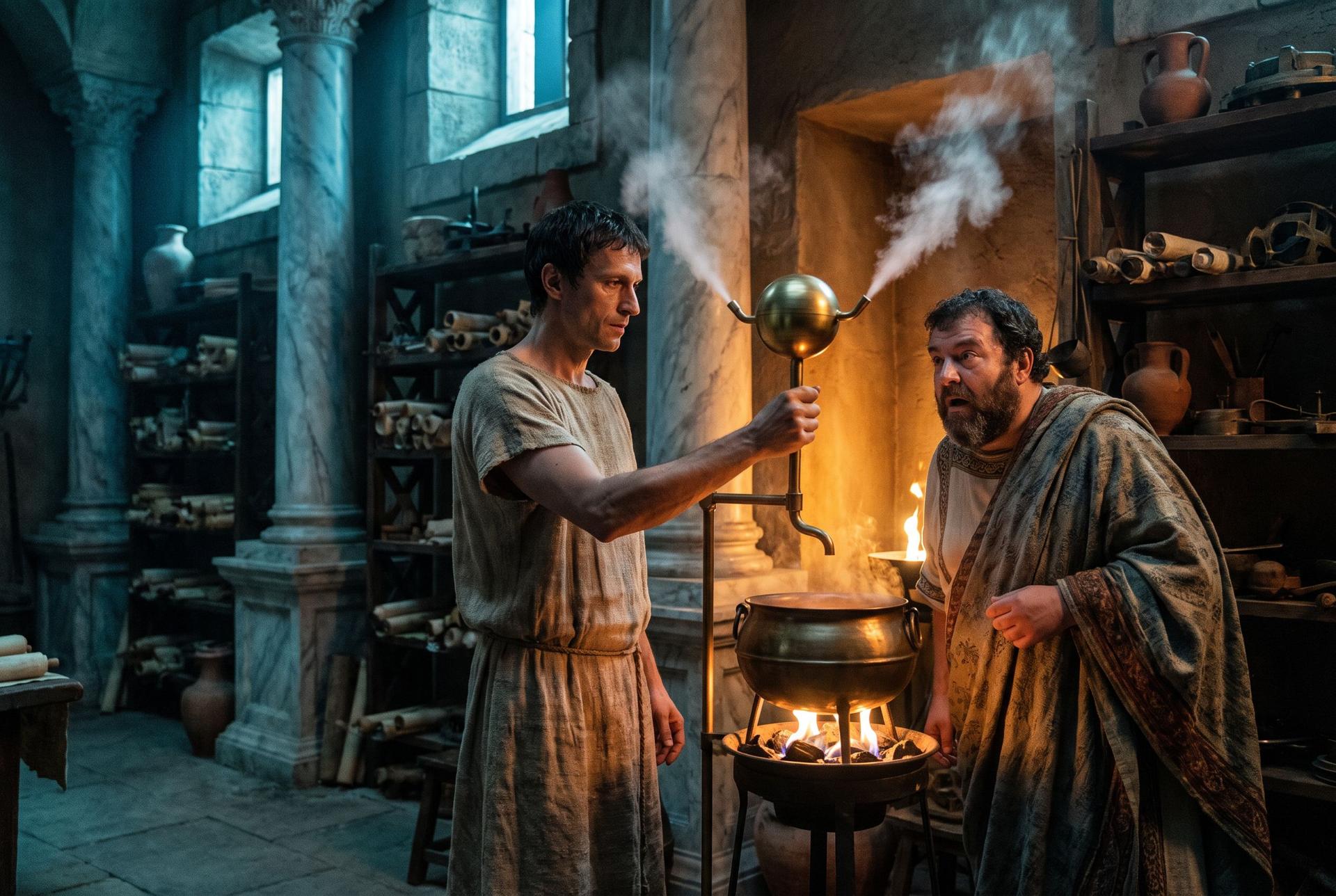
AD 62, the Museum of Alexandria. Heron the engineer builds a brass sphere that spins on steam, and the age keeps it as a temple wonder and a rich man's toy. Grain is ground by slaves, and no one asks the sphere to work. This is the timeline where a grain merchant asks, and pays to find out.
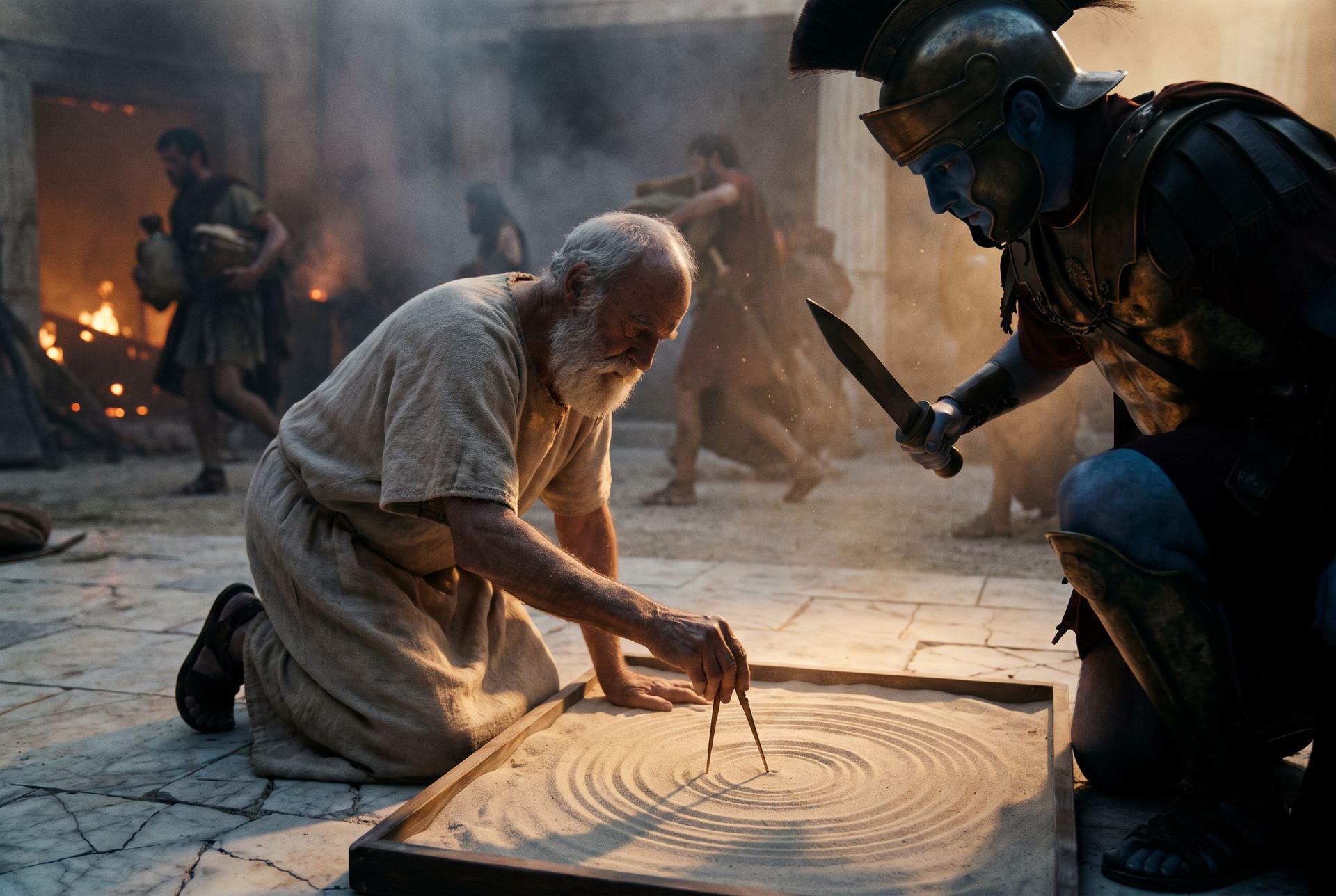
DISCOVERIES & INVENTIONS · 212 BC · SYRACUSE
The circles are not disturbed
The autumn of 212 BC, the sack of Syracuse. The Roman general Marcellus has ordered that the geometer Archimedes be taken alive, and a soldier has found him bent over circles drawn in the sand. In our timeline the soldier killed him anyway. This is the timeline where the order is obeyed and the circles are left undisturbed.
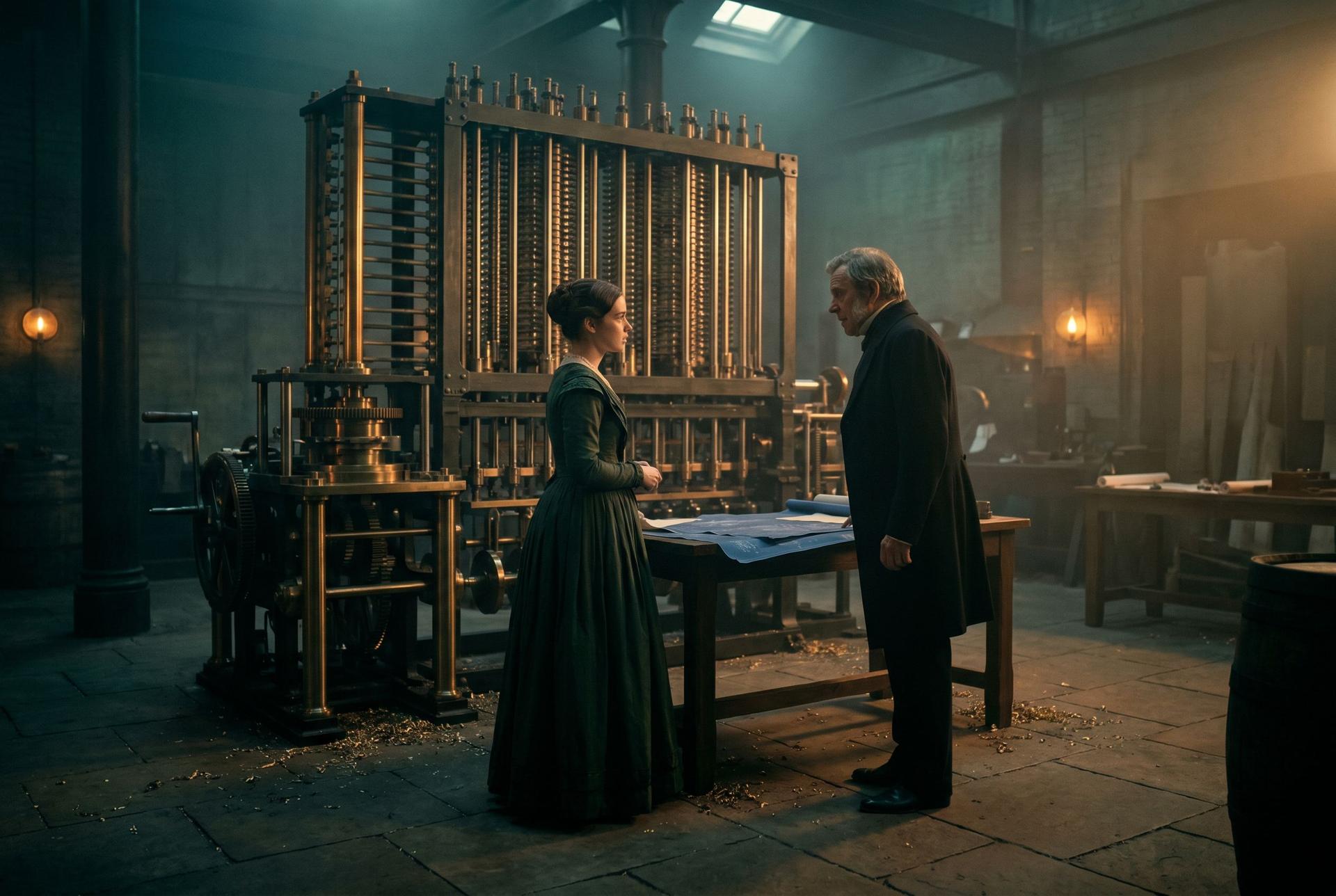
DISCOVERIES & INVENTIONS · 1843 · LONDON
Ada Lovelace boots the first computer, 1843
In 1843 Ada Lovelace published the first program ever written — for a machine that existed only on paper, because Parliament would not pay for it. This is the timeline where the Treasury said yes, and the computer age began ninety years early, in brass.