WHAT NEVER FELL
16 NOV 1532 · CAJAMARCA
Cajamarca refuses the ambush
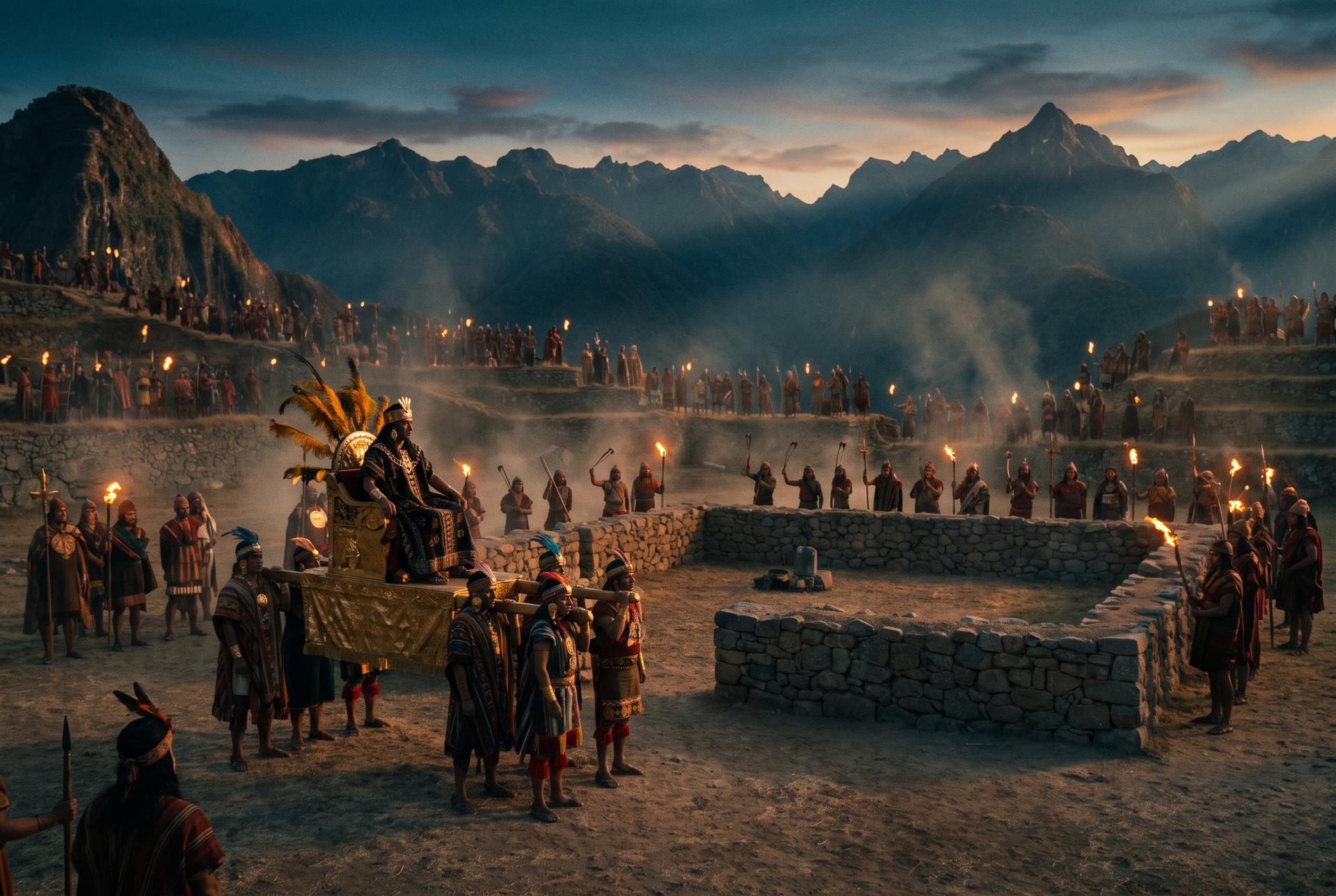
The Andes, 16 November 1532. An emperor with eighty thousand soldiers is about to enter a small square, unarmed, to meet one hundred and sixty-eight strangers. This is the timeline where his scouts finish their count.
You are reading the timeline that almost was · notes marked THE RECORD are real history
16 NOV 1532 · THE COUNT
The Andes, November 1532. The Inca empire, ten million people threaded along the world's longest mountain road system, has just survived a smallpox epidemic and a civil war between royal brothers. The victor, Atahualpa, rests at the hot springs of Cajamarca with an army of eighty thousand. Into his empire march one hundred and sixty-eight Spaniards under Francisco Pizarro. Invited to meet the strangers, Atahualpa enters the town's walled square at dusk with several thousand attendants, ceremonially unarmed. A friar hands him a breviary; he throws it down. From the surrounding buildings, hidden cannon, cavalry and steel come out at once. His attendants are massacred, the emperor is taken alive, and the largest state in the Americas is decapitated in one hour without a Spanish death.
In the timeline recorded here, the count comes back first. Atahualpa's runners have shadowed the strangers for weeks, knotting every observation into the cords. Sixty-two horses, steel on men and beasts, and, since morning, all of it moved inside the walls of the square, out of sight. An emperor who has just won a war reads an ambush in the arithmetic of it. He halts the litter at the edge of the plaza, in the open. His heralds announce that the Inca will receive the strangers here, under the sky, among his eighty thousand. Pizarro, whose entire plan was the walls, must walk out of them or reveal it. He walks out. The meeting happens; the trap does not.
Beat 1 of 8
The atlas keeps other pages near this one