FATEFUL CHOICES
SPRING 1812 · SAINT-CLOUD
The Grande Armée stays home
Saint-Cloud, spring 1812. An ambassador who knows Russia is begging Napoleon, seven hours at a stretch, not to cross the Niemen. This is the timeline where the Emperor listens.
You are reading the timeline that almost was · notes marked THE RECORD are real history
SPRING 1812 · THE SEVENTH HOUR
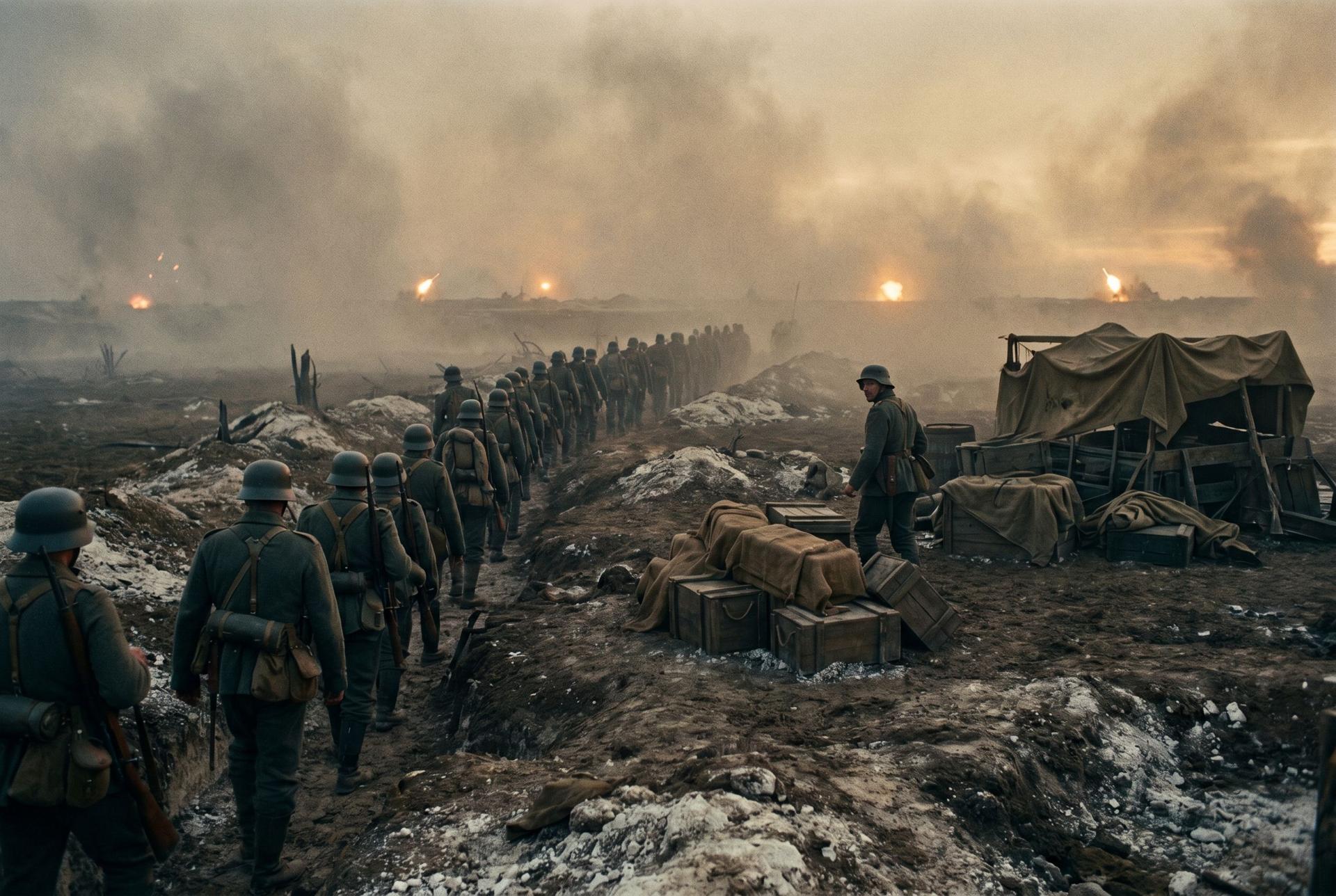
Spring 1812. Napoleon rules Europe from Madrid to Warsaw, and is preparing to break the one crowned head still defying his trade blockade. Armand de Caulaincourt, his ambassador to St. Petersburg for four years, fights the project with everything he has. In conversations that run seven hours, he tells his Emperor exactly what will happen: the Tsar will trade land for time, the country will swallow the army, and the winter will finish whatever the distances leave. He repeats Alexander's own warning, that Russia would sooner retreat to Kamchatka than sign a dishonorable peace. Napoleon laughs that his ambassador has turned Russian. In June, 600,000 men cross the Niemen. Fewer than 100,000 effectives come back.
In the timeline recorded here, the seventh hour lands differently. It is not the argument that turns; it is the arithmetic. Napoleon, who checks every number twice, has the supply tables brought in and reads them against the map while Caulaincourt waits. Twenty days of biscuit in the wagons, and Vilna to Moscow is eighty. He has conquered Europe on other men's granaries, and Russia, his ambassador keeps saying, will burn its own. At two in the morning he closes the portfolio and says the sentence that changes the ledger of the century: the pontoons stay in their parks. The war with Alexander will be fought with tariffs, and the Grande Armée will stay home.
Beat 1 of 8
The atlas keeps other pages near this one