VOYAGES BEYOND
1436 · BEIJING
The treasure fleet sails on
Beijing, 1436. A boy emperor's ministers are drafting the edict that will end China's ocean voyages forever. This is the timeline where the edict is never issued, and the great fleet keeps the sea.
You are reading the timeline that almost was · notes marked THE RECORD are real history
1436 · THE EDICT DIES
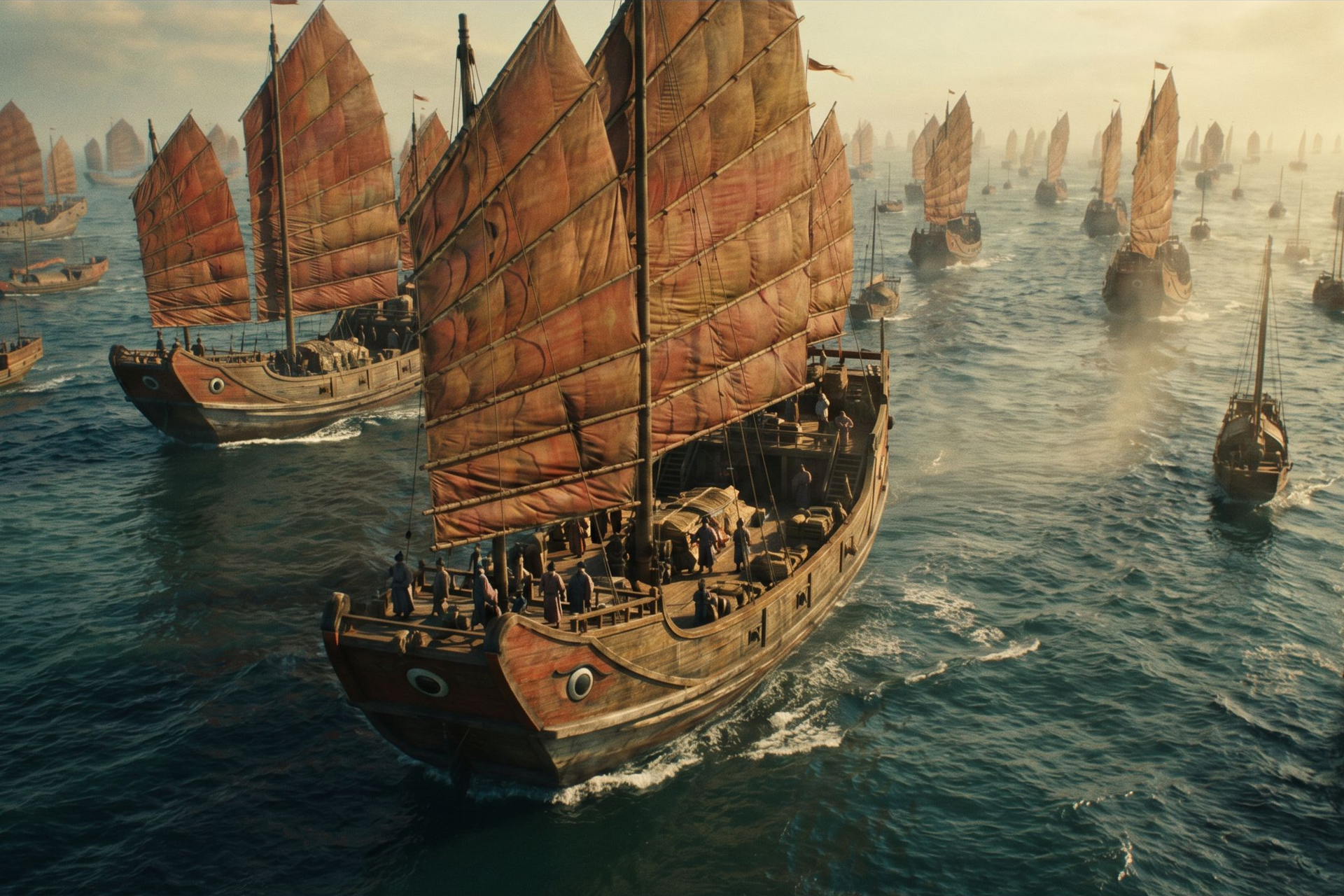
Between 1405 and 1433 the Ming empire sent seven fleets into the western ocean under the admiral Zheng He: hundreds of ships and tens of thousands of men, trading and collecting tribute from Java to the Swahili coast, generations before any European ship rounded Africa. The greatest hulls, the treasure ships, dwarfed anything then afloat in Europe. Zheng He died at sea on the seventh voyage. At court, the Confucian ministry had always despised the fleets as eunuch extravagance, and when a boy emperor took the throne, the ministers moved. An edict of 1436 forbade the building of ocean-going ships. The fleet rotted at its moorings, the voyages were never resumed, and tradition says the sailing charts themselves were later burned.
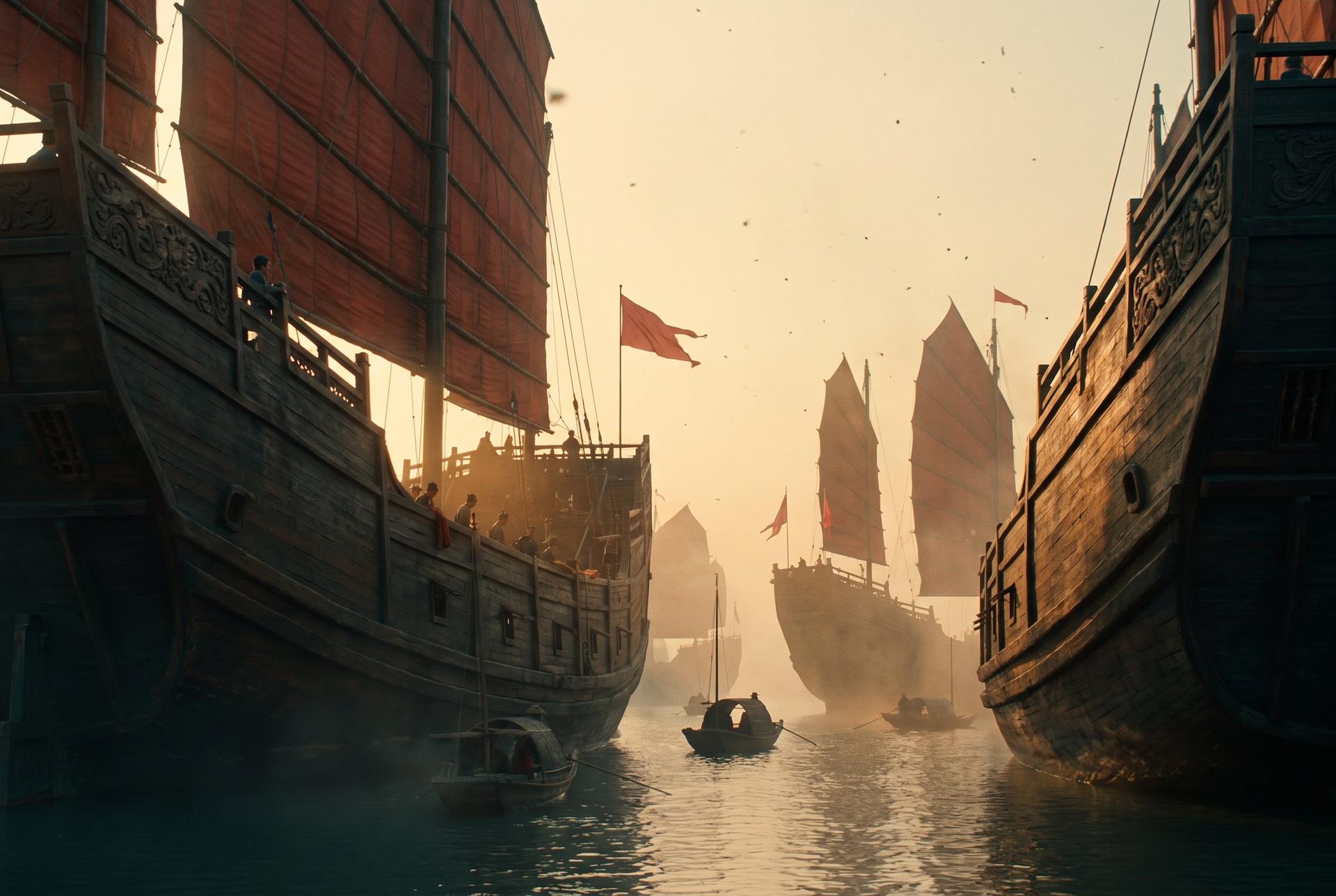
In the timeline recorded here, the edict dies in draft. The old eunuch admirals, with Zheng He's silk star charts spread before the regents, argue not glory but arithmetic. The Malacca customs alone now return more silver than the voyages cost, and a fleet abandoned is a coast undefended. The regents, ruling for a boy and fearing the northern frontier's expenses, choose the revenue. The eighth voyage sails from the Longjiang yards in 1437 under Zheng He's deputy Hong Bao, sixty-one ships. With it sails a change of purpose written in its orders: not tribute this time, but stations. The fleet is to keep the sea.
Beat 1 of 8
The atlas keeps other pages near this one