TWISTS OF CHANCE
WINTER 1226 · THE ORDOS
The khan falls at Yinchuan
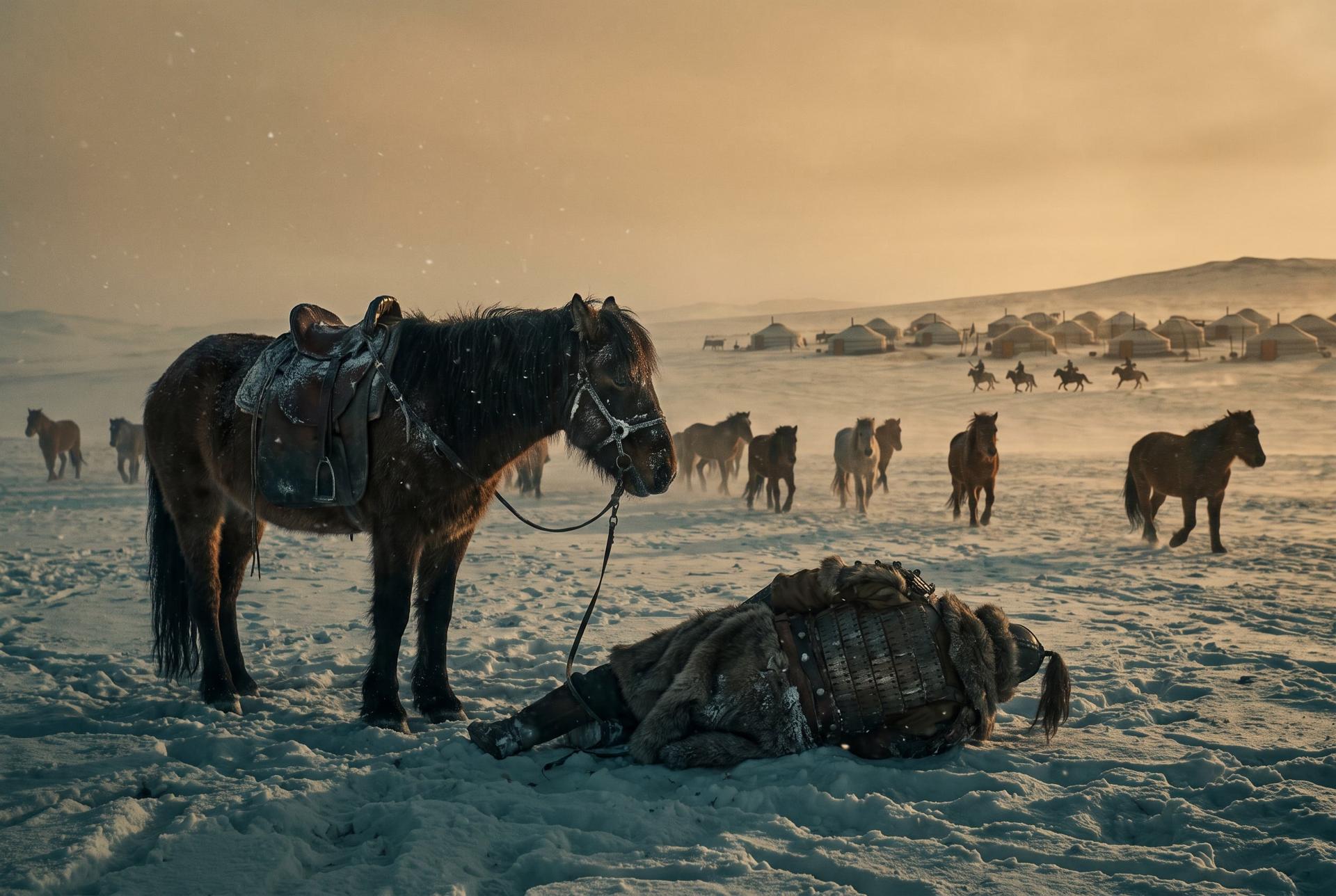
The Ordos steppe, winter 1226. The conqueror of half the world is hunting wild horses when his mount rears and throws him. This is the timeline where the old man does not get up.
You are reading the timeline that almost was · notes marked THE RECORD are real history
WINTER 1226 · THE FALL
The Ordos steppe, winter 1226. Genghis Khan, past sixty and master of an empire running from the Caspian to the Pacific, is leading his last campaign, the destruction of the Western Xia kingdom whose capital ours calls Yinchuan. During a hunt for wild horses, his mount rears and throws him. The Secret History of the Mongols records the fall, the fever that followed, and his refusal to turn back. He campaigns on from a litter for months, settles the succession on his third son Ögedei, dictates that his death be kept secret, and dies in August 1227 with the Xia capital about to fall. The machine he built runs on without him for forty years, from the Danube to Korea.
In the timeline recorded here, the ground takes him at once. The horse rears at the same wild herd, the old man falls the same way, and this time the neck breaks with the fall. There is no litter, no year of feverish arrangement, no secret kept. Sixty thousand soldiers see the riderless horse led back through the camp. The war against the Xia stops that day, because every prince and every tumen commander now has an appointment a thousand miles away, on the Onon. There the white spirit banner will be raised, and a successor must be chosen by men who were not told whom to choose. The greatest empire on earth is three days old in its grief and already riding in six directions.
Beat 1 of 8
The atlas keeps other pages near this one