VOYAGES BEYOND
c. 1200 · THE PACIFIC COAST
The canoes make landfall
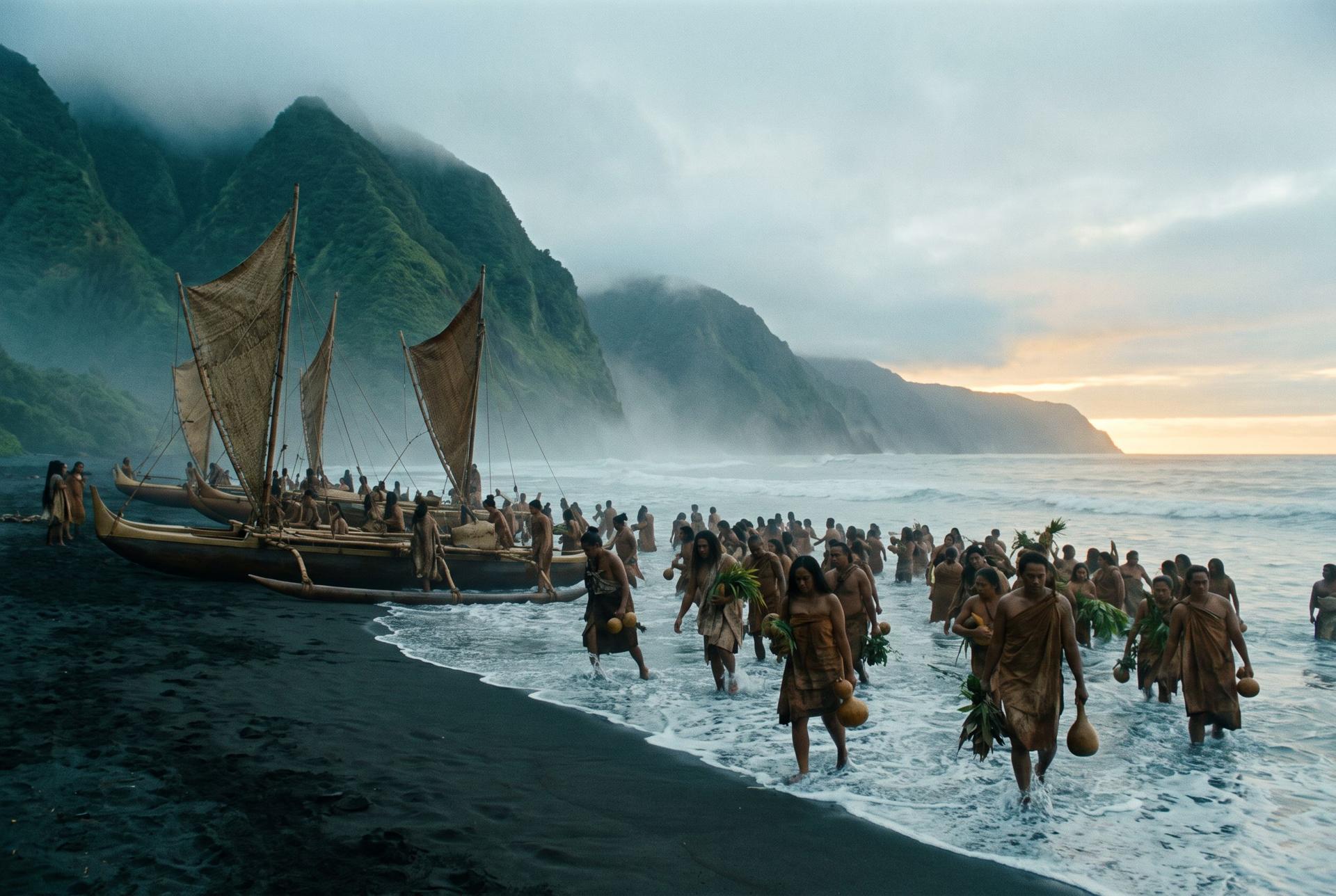
Around 1200 a Polynesian voyaging fleet, having crossed the largest ocean on Earth by star and swell, does not turn for home but settles the American Pacific coast and keeps the searoad open in both directions.
You are reading the timeline that almost was · notes marked THE RECORD are real history
c. 1200 · THE FAR SHORE
Around the year 1200, the wayfinders of eastern Polynesia had found nearly every island in the largest ocean on Earth. They sailed double-hulled canoes without compass or chart, reading the rising stars, the shape of the swell, and the flight of birds. From the Marquesas and Mangareva their voyages reached farther east, into water no one had crossed. There they touched the Americas. The American sweet potato spread back through their islands, and a single pulse of Native American ancestry entered eastern Polynesia in this century. In our timeline the meeting was brief, and the sea between closed again.
In the timeline recorded here, the fleet does not come about for home. It runs its double hulls onto a cold gray beach below green mountains and stays. In the gardens past the tideline grows a low vine with a swollen root, a plant the voyagers have never seen. They will carry it west across the whole ocean, and they will keep the road open behind them. The people of that coast have a name for the root. The islanders will call it kumara.
Beat 1 of 8
The atlas keeps other pages near this one