TWISTS OF CHANCE
28 JAN 1986 · CAPE CANAVERAL
Seventy-three seconds, and climbing
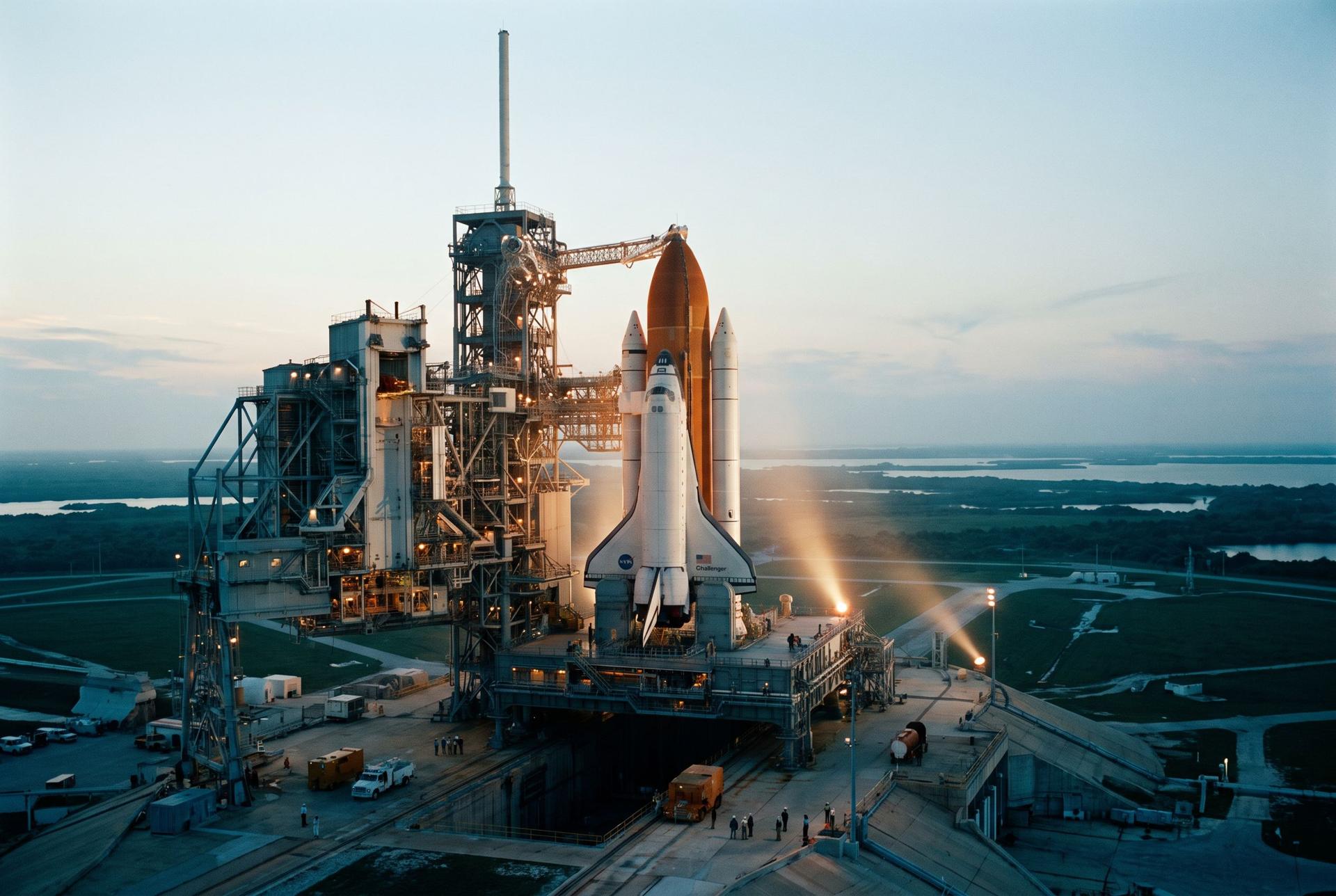
The coldest launch morning the program had ever known, 28 January 1986: ice on the gantry, and an overruled warning that the booster seals could fail in the cold. In our timeline the seal failed seventy-three seconds after liftoff. This is the timeline where the cold front stalls to the north, the rings stay soft, and Challenger climbs on.
You are reading the timeline that almost was · notes marked THE RECORD are real history
28 JAN 1986 · 11:38
On 28 January 1986 the Florida coast wakes to record cold. Ice hangs from the launch tower at Complex 39B, and the air reads thirty-six degrees. The night before, engineers at Morton Thiokol had begged NASA not to fly. Roger Boisjoly warned that the rubber O-rings sealing the booster joints stiffen in the cold and could burn through. The coldest previous launch, at fifty-three degrees a year earlier, had scorched its seals worst of all. On the teleconference his managers were told to take off their engineering hats and put on their management hats, and the launch was cleared. Aboard Challenger wait seven crew, among them Christa McAuliffe, a Concord high-school teacher chosen from eleven thousand to give two lessons from orbit.
In the timeline recorded here, the Arctic air stalls over Georgia, and Cape Canaveral wakes a few degrees warmer. No ice sheathes the tower. In a thousand classrooms the televisions are wheeled to the front of the room, because a teacher is flying today. In the booster joints the rubber rings stay soft enough to seat. At 11:38 Challenger climbs on a clean column of fire.
Beat 1 of 8
The atlas keeps other pages near this one